
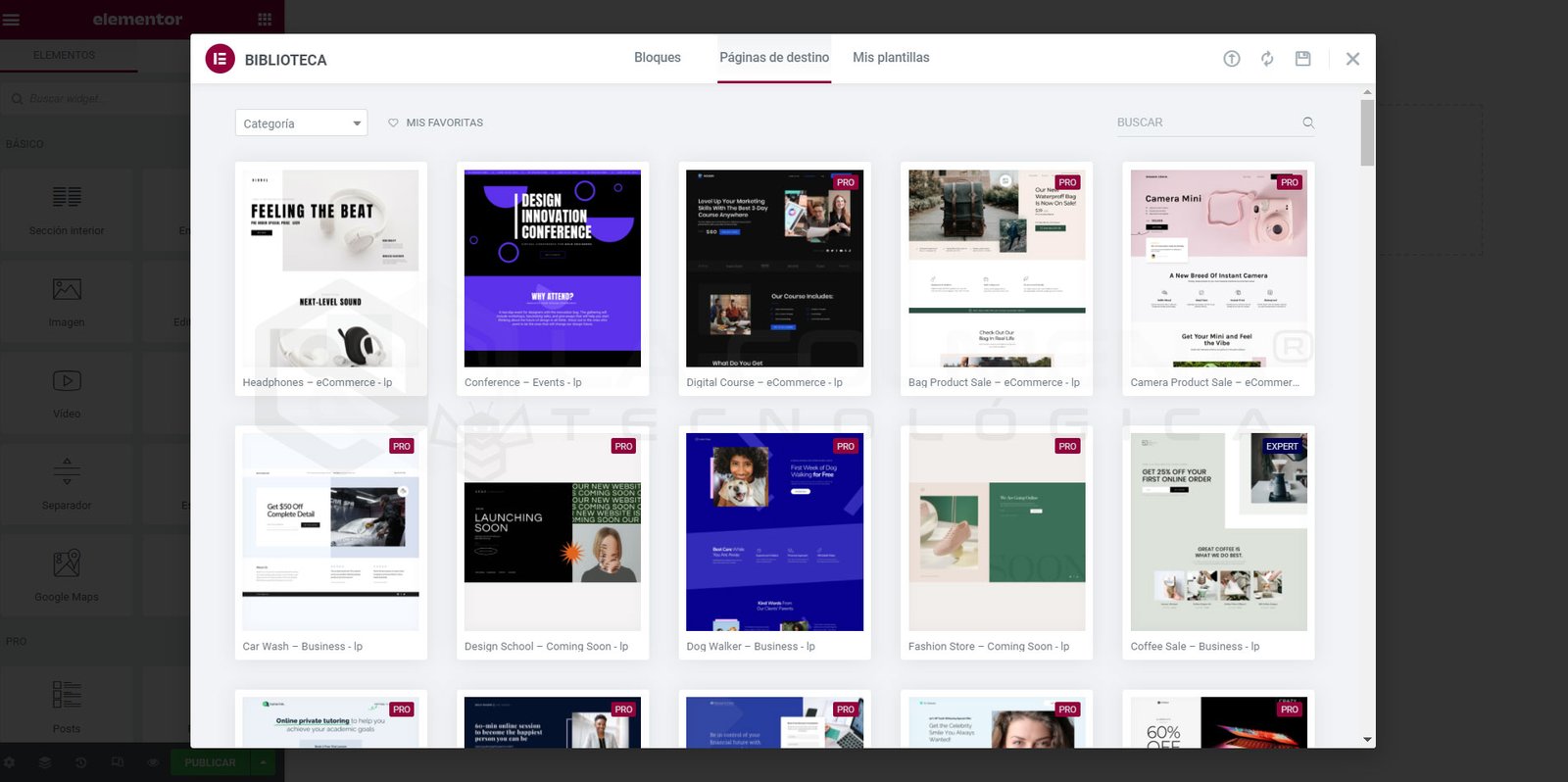
Elementor already provides a set of pre-designed landing page templates. Using these templates will greatly simplify your work, as you’ll only need to insert them and then modify them to suit your preferences.
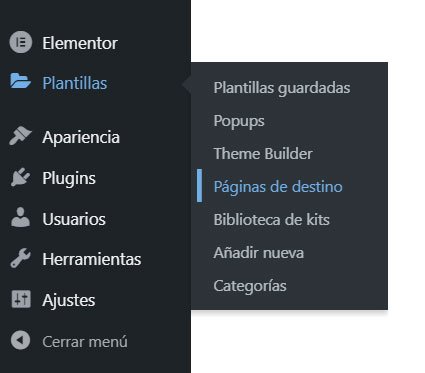
To access the templates, follow this path in the WordPress menu:
WP > Templates > Landing Pages
Then click the Add New button. The Elementor builder will open, along with a pop-up window for you to select a template.
You can click on any of the templates to see what it looks like and decide if it suits your needs. Once you’ve made your decision, click the Insert button.
To insert templates, you need to have an activated Elementor Pro license or be logged in with your free account. Templates with a PRO or EXPERT badge are only accessible if you have an activated Elementor Pro license.
What is a landing page?
In digital marketing, a landing page is a standalone web page, created specifically for a marketing or advertising campaign. It’s where a visitor “lands”—hence it’s also called a landing page—after clicking on a link in an email or in ads from Google, Bing, YouTube, Facebook, Instagram, Twitter, or similar places on the web.
Unlike web pages, which typically have many goals and encourage exploration, landing pages are designed with a single focus or objective, known as a call to action (or CTA, for short).
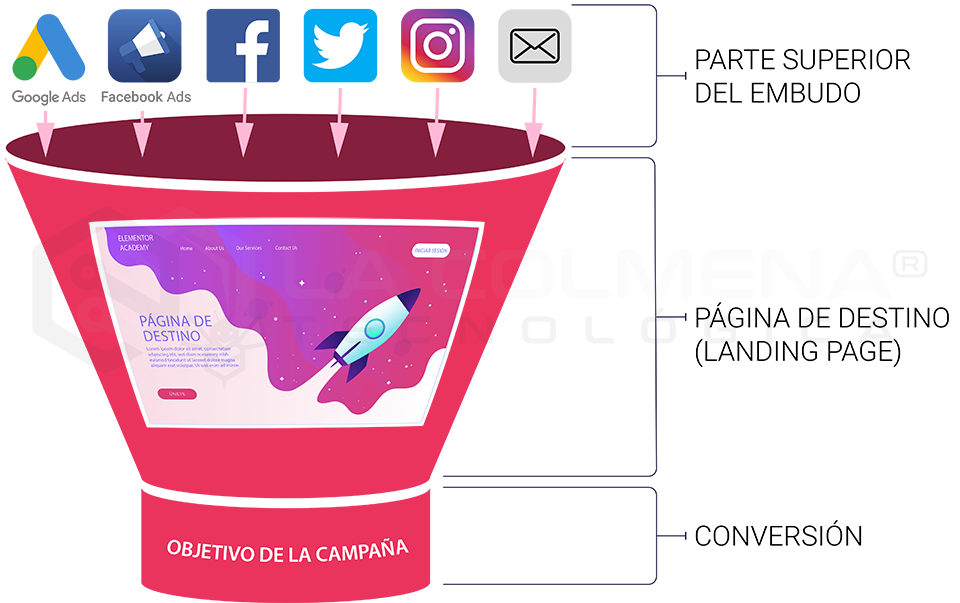
It is this focus that makes landing pages the best option for increasing the conversion rates of your marketing campaigns and reducing the cost of acquiring a lead or a sale. Landing pages are part of a marketing campaign’s funnel.
In the image, you can see how the landing page is part of the funnel that will direct prospects or potential customers who land after clicking on a link in an ad, email, or anywhere else on your website. This is where the conversion (such as a purchase, subscription, or registration) will take place.
The Key Difference Between a Homepage and a Landing Page
Or why landing pages are so good at converting
The homepage has tons of links and the landing page only has one—that’s pretty typical. While the homepage has dozens of potential distractions (you could basically call them “leaks” instead of links), the landing page is super focused. Having fewer links on your landing page increases conversions, as there are fewer tempting clicks that will draw visitors away from the call to action. That’s why marketers always use a dedicated landing page as the destination for their traffic.
Sure, the homepage looks amazing. It showcases the brand, allows people to explore a range of products, and offers additional information about the company and its values. From here, a visitor can go anywhere: apply for a job, read some press releases, review the terms of service, post on community forums, etc.
But they won’t necessarily make a purchase. And that’s the point.
This client’s landing page has a completely different purpose. Along with super clever ads promoting a single offer, everything works hard to convert these visitors into customers. It’s doing a better job of converting the traffic the brand is already receiving. That’s the power of landing pages!
Types of Landing Pages
You’ll see a lot of variation, depending on the specific characteristics of the business, but there are actually two archetypal landing pages (defined by their objectives):
Lead Generation Landing Pages
Also called lead gen or lead capture pages, these use a form as their call to action. This form almost always collects lead data, such as visitors’ names and email addresses.
B2B marketers and companies selling high-priced items use this type of landing page to build a list of potential customers. They sometimes offer something free, like an ebook or a webinar, in exchange for contact information. E-commerce brands can also use these pages to build lists or offer free shipping or special deals.
Click-Through Landing Pages
Landing pages used by e-commerce and SaaS (Software as a Service) companies are frequently used directly for sales or subscriptions. They usually have a simple button as a call to action that sends the visitor to the checkout flow (like an app store) or completes a transaction.
Driving Traffic to Landing Pages
You’ll need to fill that visitor funnel for your landing page to work. Fortunately, you have many options. Let’s explore some of the most common traffic sources for landing pages.
Paid Search Traffic
Most search engines include paid advertising. When someone searches for something (e.g., “landing pages”), these ads appear clearly marked—though not too clearly marked—in the search results. Below is a typical example from Google:
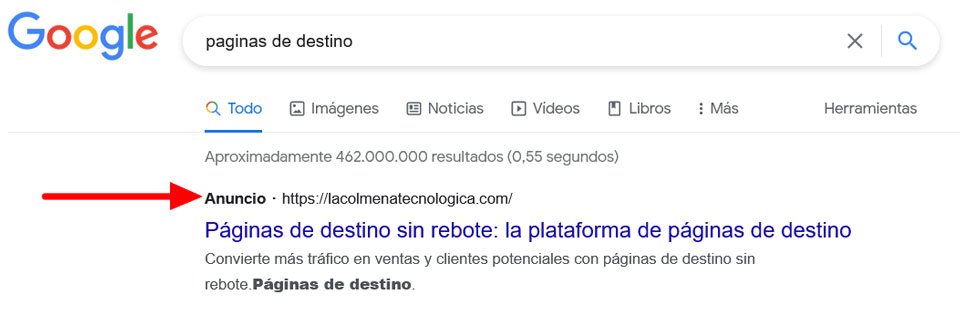
Unlike the other results on the page, pay-per-click ads are prepared and paid for by marketers. Someone who clicks will be primed by your charming copy (and sometimes visuals). And you’ve likely targeted them based on their search term, demographics, or interests revealed by their browsing history.
Crucially, when you create an ad, you can choose where the link takes your visitor. Yes, you can choose to send them to your homepage. But, as we’ll explore below, it’s much better to create a separate landing page that matches your ad copy and offers a clear call to action.
Paid Social Traffic
Running ads on social media sites like Facebook, Instagram, Twitter, or LinkedIn is an excellent way to target individuals and communities who will be particularly interested in your brand, regardless of whether they are already in the market.
Instead of people searching for “Chanel bags,” you can advertise to people who have added “fashion” to their list of interests on their Facebook profile. The interesting thing about this is that you can connect with customers before they start looking for your product, or even before they want it!
In addition to offering advanced targeting features, each social channel has its own characteristics. Instagram, for example, works well for lifestyle products and brands with strong visual appeal. On the other hand, B2B advertisers prefer to use LinkedIn to reach professionals working in specific industries.
Email Campaigns
Email is often touted as the most effective marketing channel due to its enormous reach (and low costs) compared to other platforms. A 2018 study by Radicati Group projected that there would be 4.2 billion email users by 2022. That’s more than half the planet!
A powerful combination of emails and landing pages can be used both to nurture existing customer relationships and acquire new ones. After building a contact list, your carefully crafted email allows you to entice readers with your offer, while the landing page fills in the details and directs visitors toward a call to action.
Organic Search Traffic
The term “organic traffic” refers to any visitor coming from a free source, such as the lower half of Google or Bing search results (SERPs). By creating engaging and legitimately useful content on your website or landing pages, you can ensure your business appears more frequently in related searches. The higher your content ranks, the better.
However, calling it “unpaid” is a bit misleading. It doesn’t mean there’s no time or money invested in ranking. There’s an entire field of professionals dedicated to squeezing as much organic traffic from Google as possible through a balance of careful strategy, technical knowledge, and compelling content creation. That, in a nutshell, is SEO, Search Engine Optimization.